
THE ISSUES
A full accounting of the environmental, social, privacy, and human rights harms posed by unregulated AI data center expansion — and what we're doing about each one.
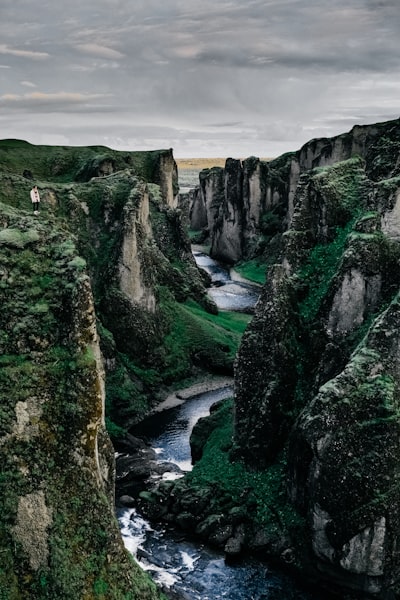
Water Rights & Aquifer Conservation
AI data centers are among the most water-intensive industrial facilities ever built. A single hyperscale facility can consume 3–5 million gallons per day for cooling — equivalent to a town of 30,000 people — draining shared aquifers that belong to all Idahoans.
- The Eastern Snake River Plain Aquifer provides water to 300,000+ acres of farmland. Projections show critical depletion by 2041 under current trajectories.
- Irrigation districts in Treasure Valley already face shortages in drought years. Data center priority rights could override existing agricultural claims.
- Surface water withdrawals from the Boise and Snake Rivers reduce minimum instream flows essential for aquatic ecosystems and downstream communities.
- Groundwater is a shared public resource — private overconsumption without recharge obligations is a taking from every Idahoan, present and future.
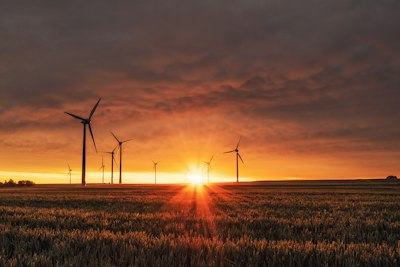
Energy Conservation & Grid Resilience
Idaho Power's grid was not designed for hyperscale AI workloads. A single planned campus in Ada County would consume more power than the entire city of Nampa. The energy burden of AI must not fall on Idaho families, farms, and small businesses.
- Grid upgrades required to serve data centers will be socialized across all ratepayers — meaning households and farms subsidize AI infrastructure they never asked for.
- Fossil fuel peaker plants may need to come back online to meet demand, directly contradicting clean energy commitments and worsening emissions.
- Large industrial consumers historically receive preferential rate structures, shifting the burden disproportionately to residential users.
- Energy conservation must be part of the equation — AI workloads should be required to demonstrate efficiency benchmarks before expansion is approved.
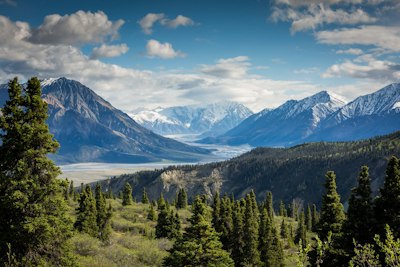
Land, Habitat & Natural Preservation
The Boise Foothills and Treasure Valley contain one of the most intact remaining sage-steppe ecosystems in North America — a globally rare and irreplaceable habitat. Once paved over, these landscapes do not come back.
- Data center campuses of 500+ acres fragment migration corridors used by pronghorn, mule deer, and migratory birds across the high desert.
- Light pollution from 24/7 operations disrupts nocturnal species, nesting patterns, and the natural darkness that defines the Idaho experience.
- Impervious surface runoff increases flood risk and reduces groundwater recharge in already-stressed watersheds.
- Agricultural land converted to industrial use is a permanent loss of food production capacity and rural heritage.

Fisheries, Watersheds & Thermal Pollution
Salmon and steelhead in the Snake River system are already listed under the Endangered Species Act. Thermal discharge from data center cooling compounds climate-driven warming and could push populations past the point of recovery.
- Cooling water discharge raises ambient stream temperatures by 2–4°C, exceeding survival thresholds for cold-water species.
- Reduced stream flows from withdrawals concentrate existing pollutants and reduce dissolved oxygen levels critical for fish.
- Impacts compound with climate-driven warming — the synergistic effect is potentially catastrophic for anadromous fish.
- Watershed degradation affects downstream drinking water quality for rural communities that depend on unfiltered surface sources.

Air Quality, Pollution & Environmental Justice
Backup diesel generators — standard equipment at all large data centers — are significant emitters of NOx, PM2.5, and hazardous air pollutants. Ada County already exceeds EPA ozone standards on multiple days per year.
- Generator testing cycles and emergency operations release concentrated particulate matter into residential airsheds with little warning.
- Proposed data center sites are disproportionately near communities of color and low-income neighborhoods in the Nampa-Caldwell corridor — a textbook environmental justice failure.
- Cumulative impacts from multiple facilities in an airshed are rarely assessed together — each project is reviewed in isolation, masking the full picture.
- Noise pollution from cooling systems, generators, and HVAC infrastructure creates chronic low-level stress for neighboring communities.
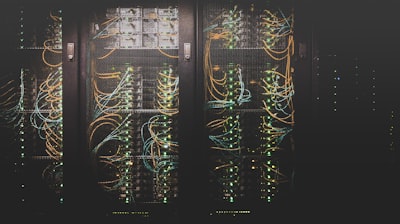
Privacy Rights & Data Sovereignty
The infrastructure of AI is not neutral. Hyperscale data centers process, store, and transmit personal information at a scale unprecedented in human history — and Idaho has virtually no legal protections governing what happens to that data.
- AI systems trained on scraped personal data — medical records, financial information, private communications — without informed consent or compensation.
- Facial recognition, predictive policing, and behavioral profiling tools built in these facilities have documented disparate impacts on marginalized communities.
- Idaho residents have no enforceable right to know what data is held about them, correct inaccuracies, or demand deletion.
- Corporate data sovereignty agreements allow foreign governments and private actors to compel data access without U.S. legal process.

Human Rights, Labor & AI Ethics
AI systems built and run in these facilities affect every dimension of human life — hiring, credit, healthcare, criminal justice, and public benefits. Algorithmic decision-making without accountability is incompatible with a just society.
- Automated hiring, lending, and housing algorithms replicate and amplify historical discrimination, often with no human review or recourse.
- Data labeling and AI training labor is frequently outsourced under exploitative conditions, often to vulnerable workers in the Global South.
- Generative AI systems trained on creative works without compensation undermine livelihoods of artists, writers, and knowledge workers.
- Algorithmic benefit denial in public systems — welfare, unemployment, Medicaid — removes human judgment from life-altering decisions.

Zoning, Permitting & Policy Reform
Idaho's land use code has no definition for 'hyperscale data center' or 'AI compute facility.' This regulatory gap is being exploited to site massive industrial operations in zones meant for farms and light industry.
- Data centers with 100MW+ loads obtain industrial permits under codes written for warehouses and small manufacturing.
- Environmental impact statements are not required under certain acreage thresholds that hyperscale facilities exploit.
- Public notice requirements are minimal, often leaving affected neighbors with days rather than months to respond.
- No community benefit agreement requirements exist in Idaho law — facilities can take and give nothing back.
Ready to take a stand?
Sign the pledge and join Idahoans demanding enforceable protections before any new data center breaks ground.
Sign the Pledge